
Welfare-first focus in the science of stunning
23 December 2025
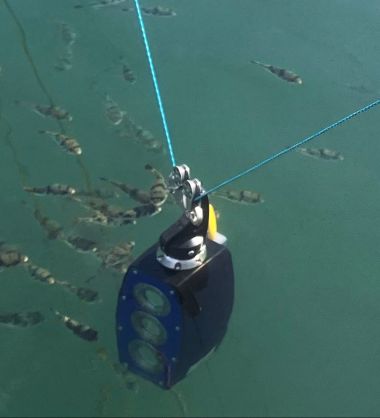
Fish are thinking, feeling animals that play, socialise, and exhibit complex cognitive abilities similar to those of mammals and birds. However, despite the recognition of fish and decapod crustaceans as sentient beings, their treatment continues to fall short of the welfare standards applied to terrestrial animals.
Dr Niki Khan, Lead Scientist at Ace Aquatec, who is focused on animal welfare at the time of slaughter noted that practices commonly accepted for aquatic animals would be considered unacceptable for terrestrial livestock. “In regulated slaughterhouses for pigs, cattle and poultry, stunning is mandatory in most cases, whereas many fish and other aquatic species are not subject to the same welfare requirements,” she said.
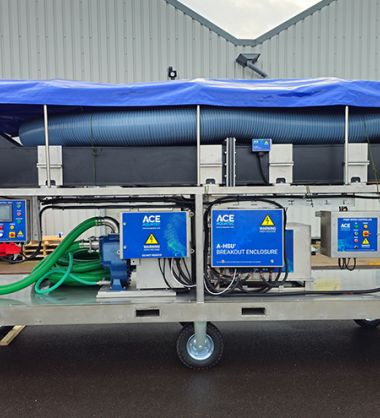
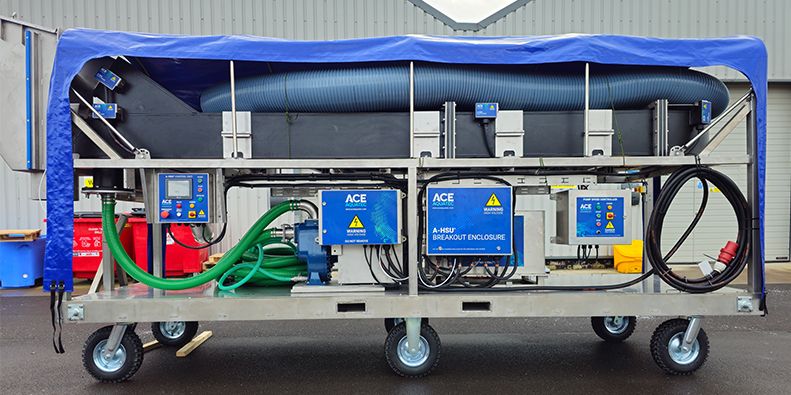
Ace Aquatec has pioneered humane stunning technology with its in-water Humane Stunner Universal (A-HSU®) system, developed for all commercial fishing species. This system was designed to stun fish and crustaceans unconscious in less than one second, whilst keeping the fish in water.
In Scotland, where Ace Aquatec is based, the government has recently issued new guidance, under section 38 of the Animal Health and Welfare (Scotland) Act 2006, on the welfare of farmed fish at the time of slaughter or killing. UK welfare legislation states that ‘animals shall be spared any avoidable pain, distress or suffering during their killing and related operations’, including fish. The law reflects good practice among Scottish salmon producers, who must also comply with revised RSPCA Assured welfare standards that include requirements for humane stunning and CCTV for the entire slaughter process.
“The guidelines state that salmon and trout should be stunned before slaughter and rendered unconscious immediately,” said Khan. “While there is some debate over how ‘immediately’ is defined, it is generally understood to mean within around one second, which can be challenging to measure in practice. The RSPCA also recommends that fish are not kept out of the water for more than 15 seconds — a requirement that our in-water stunning system is designed to meet.”
“In dry electrical stunning systems, fish are removed from the water and put on a metal conveyor belt, where a series of finger-type electrodes apply an electrical field to induce loss of consciousness. Correct head-first orientation is critical; if fish are misaligned, they may be exposed to partial electrical currents or pre-shocks prior to effective cranial contact, resulting in pain before full unconsciousness is achieved."
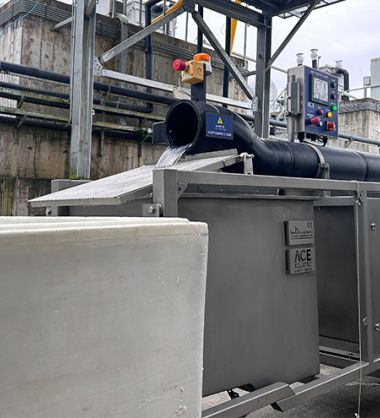
“With in-water stunning systems, fish stay submerged for most of the process, only briefly passing over a dewatering grid for a few seconds before entering the water-filled stun pipe. Maintaining immersion supports normal gill function and oxygen exchange, reducing physiological stress. The brief dewatering period minimises time out of water, while the in-water electrical field rapidly induces unconsciousness, as the water carries the full electric field, so it delivers a consistent shock across the entire body. That means you’re not going to get any external burns, and you’re not going to end up with any potential damage due to an electrode touching the skin for longer than necessary. This is critical for ensuring the fish get an even stun, and handlers don’t need to spend time moving the fish, which is stressful for the fish. With in-water stunning, because the fish are unconscious within a second, they don’t have time to mount a stress response to the stunning method, which can affect the quality of the flesh."
Ineffective stunning is also stressful for the processing operators and Khan said that with in-water stunning there is a reduced rate of elbow, shoulder and wrist injuries.
"In an environment with fish jumping about where stunners are not used, the workforce can become desensitised to the movement of animals and less likely to notice if something is wrong."
Furthermore, fish that remain still are less likely to fall off the conveyor belt and get damaged and thus downgraded, making them suitable only for pet food.
"We carried out quality tests with the A-HSU® at a Scottish rainbow trout farm in June, looking for stunner related damage, spinal breaks or haemorrhaging of the dorsal vein that runs alongside the spine or blood spotting in the flesh. The results were perfect. We also carried out small-scale studies in Japan, looking at sea bream and Japanese amberjack, and again we had no damage."
Japanese producers routinely use percussive stunning methods, which can cause haemorrhage, stun marks, bulging eyes, and bruising to the upper fillet, or electrical stunning on a mat, which, Khan says, can cause stressful pre-shocks.
Other methods deployed around the world include live chilling, ice slurries, and CO2 narcosis, which involves immersing fish in carbon dioxide and is banned in the UK.
Welfare improvements tend to be driven by retailers who are influenced by consumer demand, and Khan has noticed a big shift in attitudes in the past decade, with increased public interest in the welfare of aquatic animals.
"People wouldn’t accept salmon now that was inhumanely harvested, and Tesco has committed to only purchasing electrically stunned prawns by the end of 2026 and Iceland by the end of 2027."
Ace Aquatec is developing innovative in-water stunning solutions designed to improve fish welfare for a wide range of producers, from small-scale operations in Asia and LATAM to major supermarket suppliers worldwide.
“We are also working on a small-scale, portable, in-water electrical stunner with a 20kg batch capacity. This means that even smaller producers can adopt welfare practices that not only improve fish welfare but also open up wider market opportunities."